
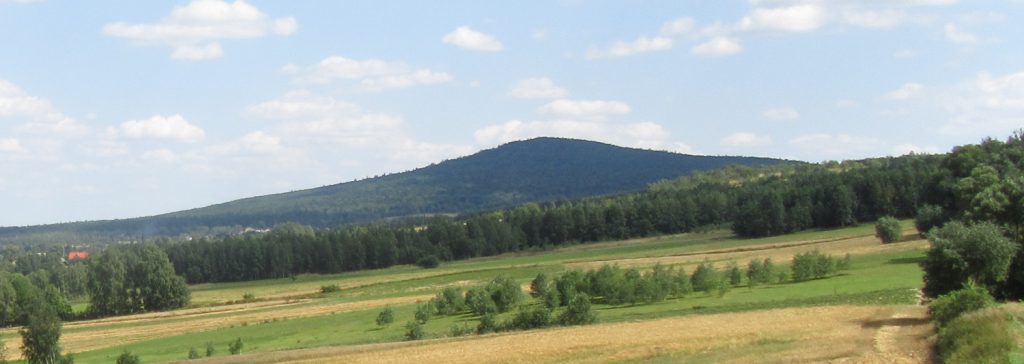
Łysica moutain is the highest peak (614 metres above the sea level) of the Bald Mountains and of the whole Holy Cross Mountains. A translation of the name to English is a little bit tricky because it bears resemblance to Bald Mountain (Łysa Góra) where the Holy Cross monastery is situated. Although if we meet in person someday I will try to explain those differences in detail.
Łysica along with the Bald Mountains, is a part of Holy Cross National Park that has an area of 77 square kilometres with a primary focus on protection of fir forests and the Cambrian quartzite sandstone that builds the mountain range.
There are many stories related to this site. Some of them from times before Christianity faith was introduced on this soil, some about polish uprisings during the Partitions in XIXth century. Dark times of II World War also left their marks on this area.
A hike starts in Święta Katarzyna village, which means literally Saint Catherine, with a visit in the franciscian-observants monastery. There are two other chapels along the road. The first one is associated to Stefan Żeromski, the most famous writer who was born in the Swietokrzyskie province. He once saw a mysterious writing on the wall made by XIXth century polish insurgent. This inclined him to a commit a certain act of vandalism we can still look at today. The second chapel devoted to Saint Francis is placed near a spring that, according to some folks, has healing abilities.
After climbing Łysica there is an opportunity to visit the Museum of Minerals and Fossils with one of the biggest in Poland collection of striped flint. A mineral that can be found only in the Holy Cross Mountains.
There is also Miniature Park in Krajno village with buildings from around the world. For instance, you can see mountain Fuji against the Łysica which is not a view you can experience anywhere else.